
What does dataset diversity mean when it comes to African fashion? A Pace lab is finding out.
Writing by Vivian Reutens. Writing and editing by Ogechi Okafor.
Artificial intelligence is getting better at generating fashion. It’s just not very good at understanding it. When prompted to create images of West African wax prints, AI models produce visually striking images which are culturally flattened.
Why do all the outputs have the same yellow floral pattern? Why do almost all the models have the same hairstyle, and why are the cuts of their clothing almost identical?
The same silhouettes repeat. Patterns blur together. Entire traditions are reduced to a handful of aesthetic cues.
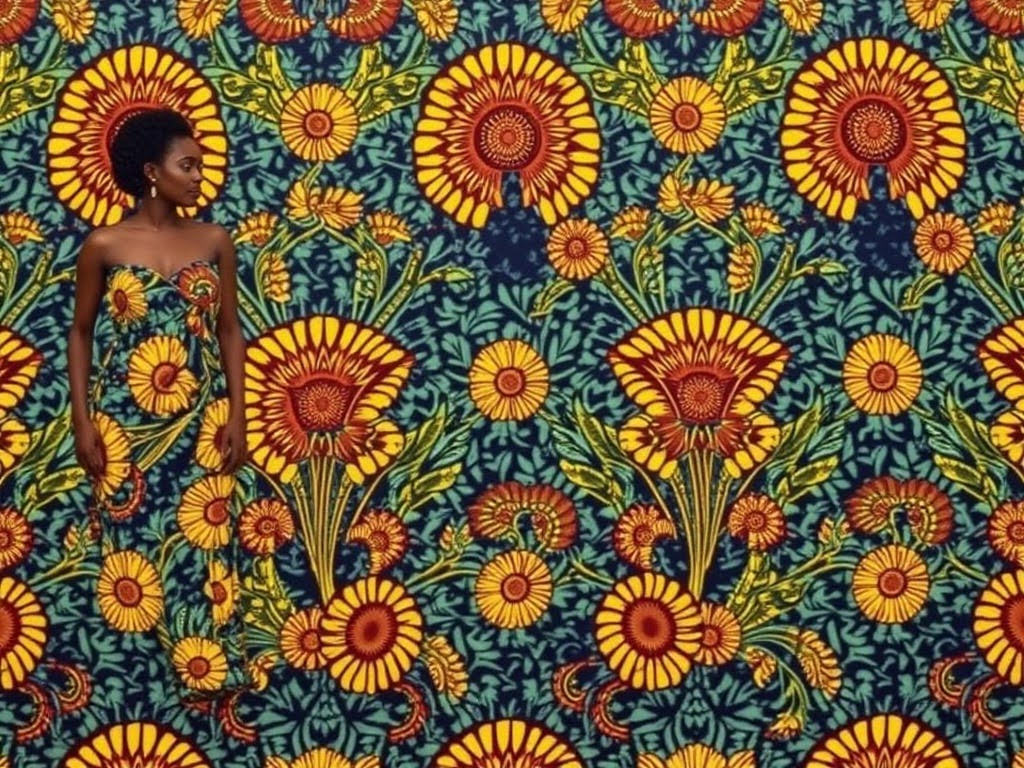
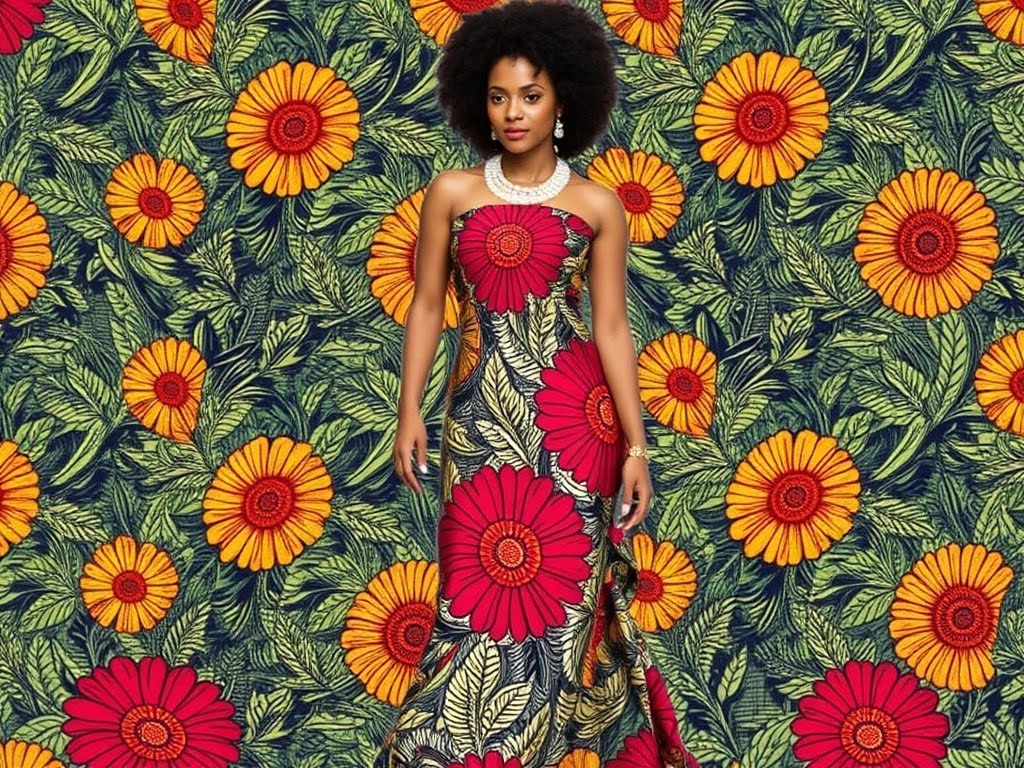
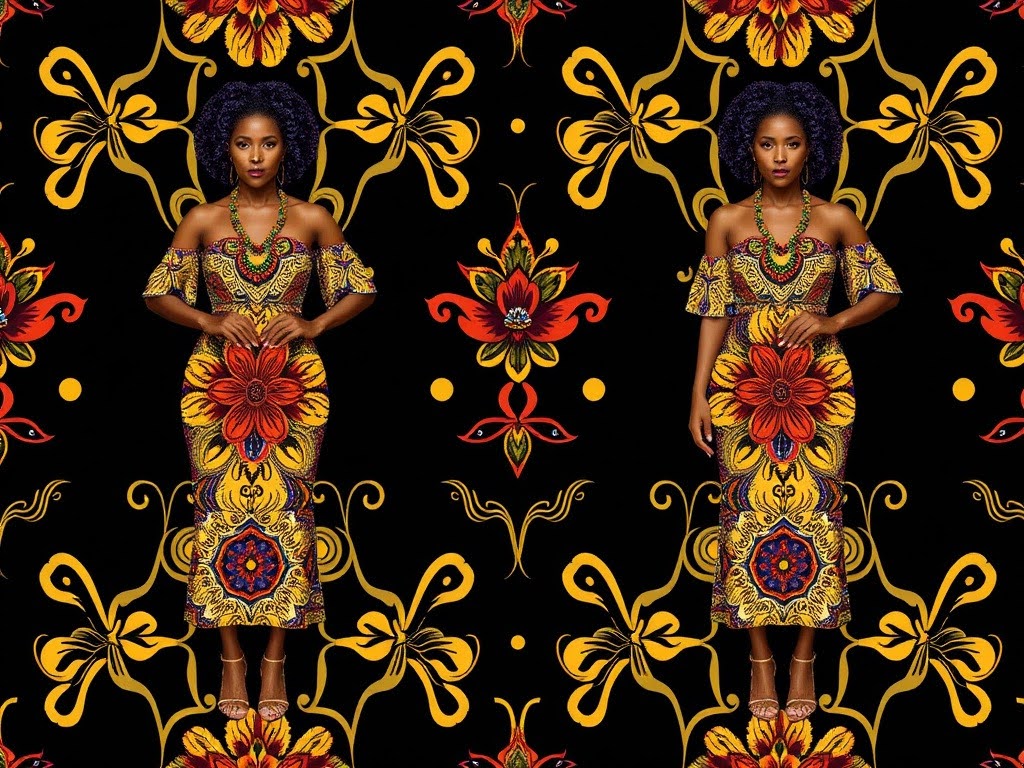
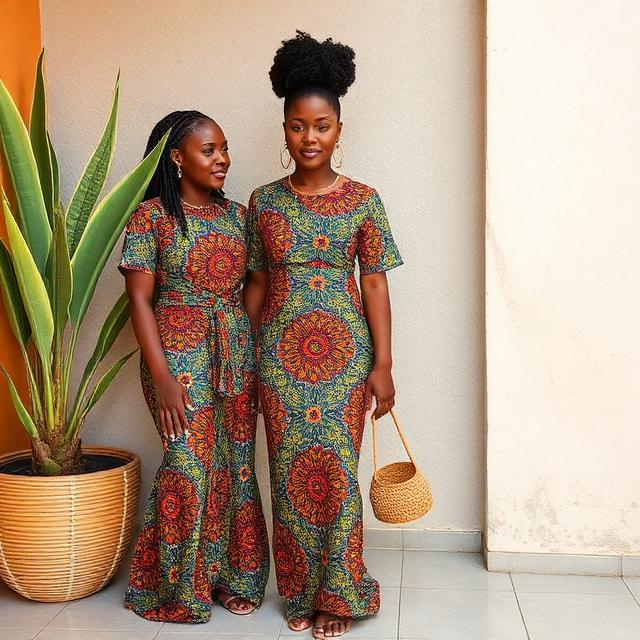
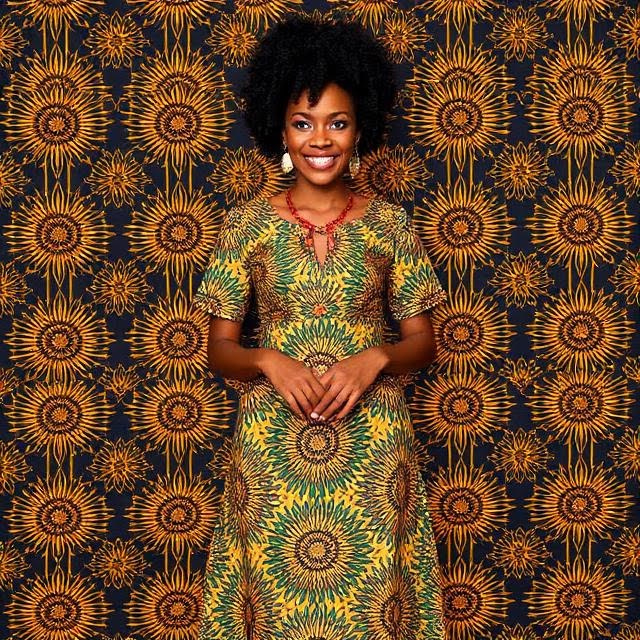
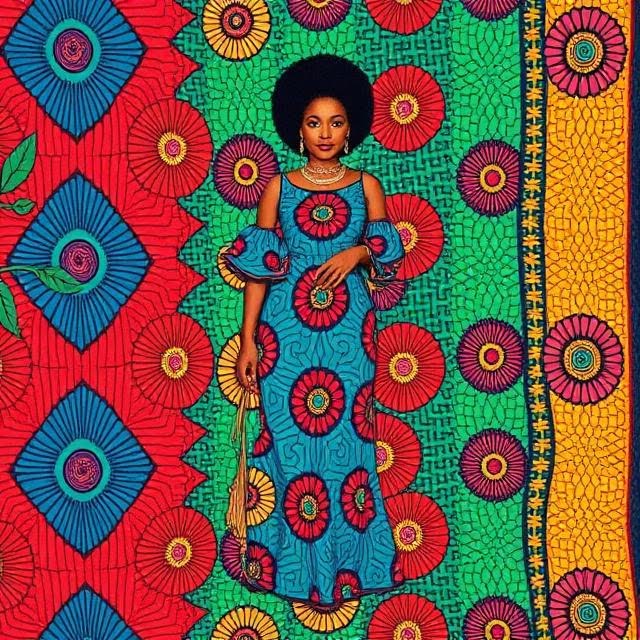
Prompt: Ankara/West African wax print. Freegen.app (first row), DeepAI.org (second row).
The problem is what the algorithm has been taught to see. Most generative AI models work by detecting patterns in training datasets and using algorithms to generate new content that replicates those characteristics. However, when a model’s input data lacks diversity, its output will similarly be biased. This issue has been studied extensively in the medical field, where models which, for example, are trained mostly on pale skin and thus fail to detect skin cancer on darker-skinned patients, can be deadly.
The same issue is taking place in applications to fashion. Fashion datasets are becoming increasingly popular as benchmarks for AI algorithms involving ML and computer vision. The leading dataset, Fashion-MNIST, contains 60,000 images pulled from the website of Zalando, a European e-commerce website. These tens of thousands of images are compressed into just ten categories: T-shirt/top, trouser, pullover, dress, coat, sandal, shirt, sneaker, bag, and ankle boot. As a result of being trained on a Western retailer’s catalog, models trained on Fashion-MNIST tend to misclassify garments from non-Western contexts.
Take a Senegalese boubou, an Indian sari, and a Cambodian sampot. The stitching and design processes of each of these garments take hours of craftsmanship and consist of many stages of specialized weaving. These processes produce a piece of clothing that is unique to its cultural context and contains religious, historical, and/or meaning. The boubou has at least ten variants across West Africa, and has received Yoruba, Nupe, and Islamic influences. The sari, first mentioned in the Rig Veda, suits both India’s hot, tropical climate and the modest preferences of the Muslim and Hindu populations there. The sampot is closely tied to Khmer culture and is associated with divine beings called apsaras. Datasets for AI models will reduce these garments to broad labels like “dress,” which flattens the diversity of global fashion and misrepresents cultural history. In a world increasingly driven by data, what isn’t included and labeled with correct cultural context risks going unseen and getting erased by history.


)
From L to R: Boubou vert, Leunajones, CC BY-SA 4.0, via Wikimedia Commons. Sari, © Yann Forget / Wikimedia Commons / CC-BY-SA. Sampot, Cambodia4kids.org Beth Kanter from Massachusetts, USA, CC BY 2.0, via Wikimedia Commons.


.jpg)
Enter the Pace Artificial Intelligence Lab. Headed by Dr. Christelle Scharff, a CS professor at Pace University, the Pace AI Lab seeks to improve the inclusivity of fashion datasets and explore applications of generative AI to non-Western contexts. Scharff, who most recently received a Fulbright Award in 2026 to study AI in Senegal, chose to focus on West African fashion. The lab is working to a) expand the scope of Fashion-MNIST to West African garments, and b) train generative AI to reproduce patterns found in a West African textile known as wax or Ankara.
One of the lab’s foremost challenges in both projects was the sparsity of relevant images. To create its dataset of Senegalese women’s apparel, which comprised images of the boubou and taille mame, the lab had to collect images from Senegalese designers on Instagram and ask Senegalese female students to label them. They were ultimately only able to collect 143 images for each garment, which was deemed insufficient for training a generalized model that could reliably distinguish between them. The lab had to generate more data by using Photoshop to transform the images it had via rotation, shear, translation, and reflection.
The lab ran into a similar problem when working on its wax fabric generative AI project. First, the lab created a dataset with around one thousand images collected with permission from the website of a prominent wax fabric manufacturer called Vlisco. After preprocessing the images, the researchers generated a set of patterns. However, the images were not of satisfactory resolution, were mostly blue or green due to the lack of color diversity in the original dataset, and had similar textures. The lab computed the set’s Fréchet inception distance (FID), which measures the difference between a distribution of generated images and a distribution of real images (the lower, the better). The set only scored a “fair” result.
Attributing this to a lack of source images, Pace researchers then used DALL-E, OpenAI’s prompt-driven image generator, to create a larger synthetic fashion dataset. Unlike the Senegalese apparel classification project, they were unable to simply transform their pre-existing images due to the differing natures of clothing items versus wax patterns. Prompts such as ‘Green African wax’ and “African wax textile pattern with traditional African symbols of Adire brown color” were used in order to avoid duplicates and ensure a variety of colors, patterns, and designs in the final dataset.
Ultimately, the lab created two datasets, one with two thousand images and another with five thousand images. To test different generative adversarial network (GAN) and Stable Diffusion models, the lab primarily used the 2K dataset, as “sometimes it is too compute intensive to use the 5K,” Scharff said. Five Senegalese fashion designers were consulted in order to refine and verify the accuracy of the dataset’s inputs and the models’ outputs. At the Pace AI Lab’s International Women’s Day celebration on April 10th, Scharff noted that “when we show the AI generated designs to artisans, they are often impressed by the quality and accuracy of the prints.” Indeed, in a 2024 keynote, designers are quoted as saying that the generated patterns “really look like wax patterns with diversity in colors” and speculating that “some patterns could be used by designers on the artistic side.” There is room for improvement, though, as the designers also noted that the designs were still lacking in symmetry, repetition, crispness, and clarity.
Scharff wrote in her paper that she wants to enable models to “capture the diversity and complexity” of West African garments, enabling them to “generate new, high-quality designs that are both novel and representative of the style.” Abigail Keegan, a master’s student working in the lab, added that the dataset can improve accessibility and make it easier to learn about wax and image generation.
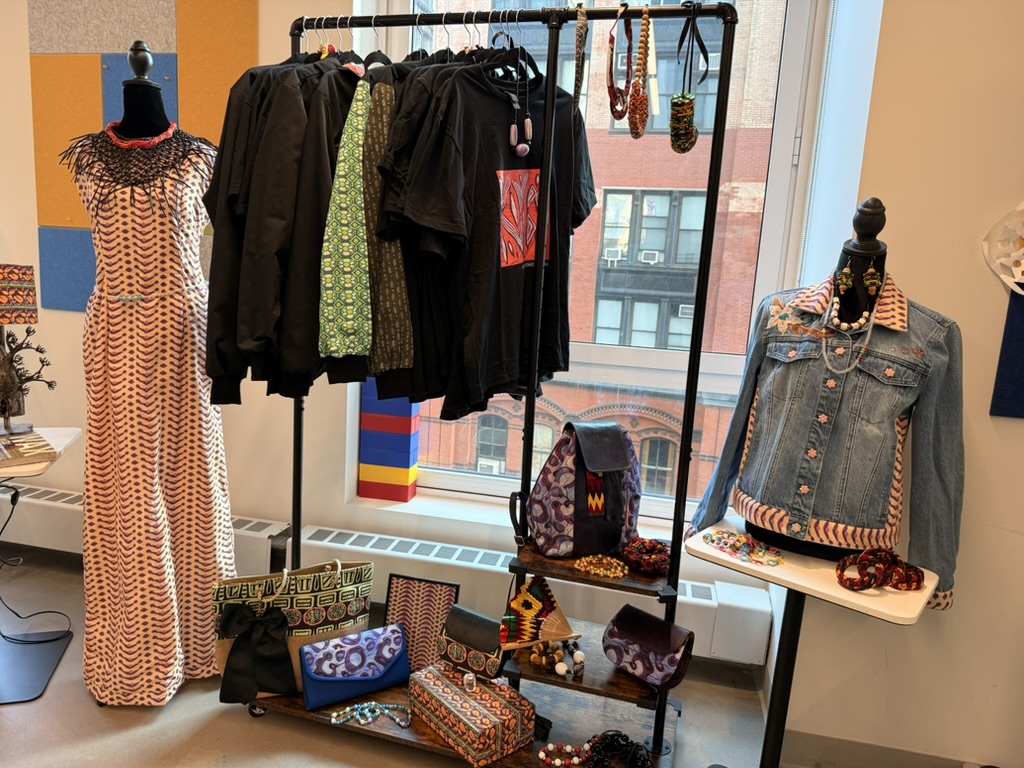
As proof-of-concept, the lab has commissioned various bags and clothing decorated with AI-generated designs, which were displayed at the Pace International Women’s Day celebration on April 10th. Photo courtesy of the Pace AI Lab.
Ethical Questions
Such applications of AI inevitably invite questions about the role of AI in creative pursuits like fashion. Scharff has consistently stated that AI can augment the creative process rather than replace human designers completely. In a 2023 DevFest talk, Scharff said that she respects artists for “[putting] very personal things into what they’re doing,” and noted that “the model will not do that.” In a 2024 conference paper, she pointed out that wax designs are currently designed using graphical editing software, and wrote that generative AI could allow designers to work more efficiently and “guide the creative process with textual descriptions of different granularity of details.“
Scharff wrote in a 2024 ethics paper that this use case might be an example of “technical innovation [solving] technical innovation’s ethical problems.” While prominent voices have called for slowing the pace of technological innovation until ethical issues have been resolved, Scharff argued for an “accelerationist” approach: solutions to ethical problems, she argued, could be found by retooling the very mechanisms that created the problems in the first place. The techniques and tools used to create the wax dataset, she pointed out, are the same as those already in popular use, only “re-oriented with new data gathered from previously unexplored regions.”
Scharff optimistically positions this dataset as a tool meant to augment, not automate, African designers’ work. With the input of subject-matter experts, AI models can now create output that looks like traditional West African garments. However, they can’t truly understand what the wax patterns emblazoned on them mean. Wax fabrics are largely considered to be a symbol of African heritage. Portia Kemi Attipoe, a Ghanaian fashion designer, considers them “African design.” Amma Aboagye, a member of the Ghanaian diaspora and founder of The Afropole, a brokerage seeking to connect African and Afrodiasporan businesses, considers them a “reflection of our own ideas, symbols, conversations, [and] histories.” Many wax fabric designs carry narratives bestowed by local communities, such as “Don’t Get Married Empty-Handed” and “Six Bougies.” An AI replication of these designs might nail the visual geometry of these patterns. But as to the joke, the context, and the specific moment a community decided this print meant something: none of that is in the training data. It is possible for the model’s output to simultaneously be factually correct and culturally empty.
There is also the question of how these AI-produced patterns might fit into the larger historical context of wax fabrics in Africa. African wax fabrics have a long history, tracing back to Indonesian batik, a fabric made using wax-resist dying. When the Dutch colonized Indonesia, they tried to manufacture their own machine-made version of batik in order to industrialize it and flood the market. Researcher Anne Grosfille theorizes that this was motivated by the loss of Flanders, an important textile region, to Belgium, and the resulting need to boost the Dutch cotton industry.
The Dutch created a machine-made version of batik by the end of the 19th century; however, the industrialized process let dye seep through and created a “crackling” effect that Indonesian locals had a distaste for. Looking for customers, the Dutch found a market for these imitations in West Africa, where there was a preference for fabric with the “crackling” effect. In addition, men from the Gold Coast who had been drafted to fight in Java between 1832 and 1872 had brought batik back to West Africa as gifts for their families, so there was already familiarity with the material.
The leading high-end manufacturer, Vlisco, began selling fabrics directly to West Africa by 1876, and the Dutch batik imitation industry turned its full focus toward the region by the 1930s. Today, Vlisco still manufactures their fabrics in the Netherlands, which are exported to Africa, distributed, and turned into accessories and clothing by local artists. However, several of its subsidiaries now operate in different parts of the African continent, catering to local tastes and varying price points. Some consider the fabrics to be a product of colonialism. Additionally, an increasing amount of cheaper imitation wax fabric is being imported from China. In the midst of this contested landscape, the introduction of AI-generated wax patterns raises yet another question about who controls the aesthetic.
The lab hopes to make its Senegalese garment classification model accessible to the community via a web and mobile interface, without commercializing the tool. They are already starting to share their papers, findings, and models with the academic community through the open-source data platform Hugging Face.
The wax fabric generative AI project’s goal is to “encourage researchers, creators, and institutions in Africa and beyond to build on this work and develop their own AI applications on our datasets,” Scharff wrote to us.
Ultimately, the real success of this project won’t be measured just by FID scores, but also the extent to which West African designers are empowered to retain creative sovereignty over their craft.